Why Robinhood Route Selection Matters on WheelX
September 7, 2026
Why Large-Value Routing Matters on Robinhood Chain
Robinhood Chain has moved beyond the launch-day phase. L2BEAT listed roughly $1.70 billion in Total Value Secured and about $105.93 million in cross-chain volume over the previous 24 hours when we checked on 3 September 2026. The same page showed about 29.47K cross-chain transfers.
The capital routes are also concentrated enough to matter. In the L2BEAT interop view, Ethereum → Robinhood was the largest displayed route at about $50.40 million. ETH, USDG and USDC were among the top tokens by volume, while Across, LayerZero and the Robinhood Chain Canonical bridge were the leading bridges shown by volume. That is exactly the environment where routing becomes part of execution quality, not just a technical step.
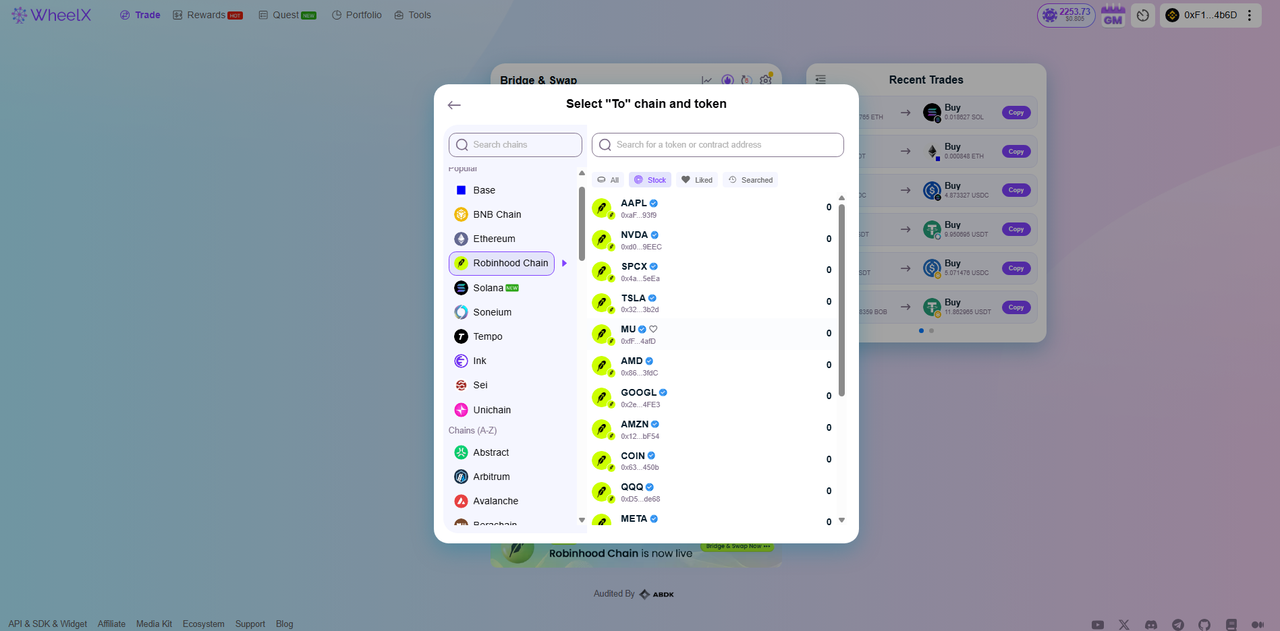
WheelX has supported Robinhood Chain since day one. The earlier WheelX launch guide describes WheelX as a cross-chain bridge and swap aggregator supporting 50+ networks and 100+ DEXs, with direct access to supported Robinhood Chain assets including tokenized U.S. stocks and ecosystem tokens. For this test, we focused on a route that is directly relevant to Robinhood’s current stablecoin activity: USDC on Optimism → USDG on Robinhood Chain.
Live Test: Scale One Route From $10 to $100,000
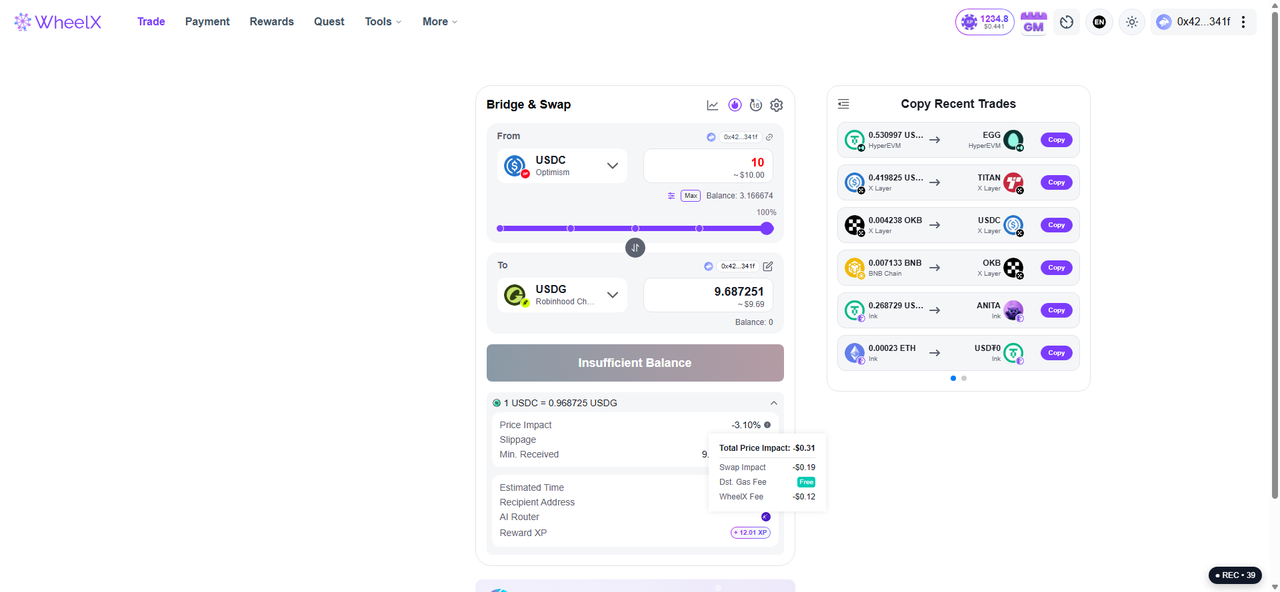
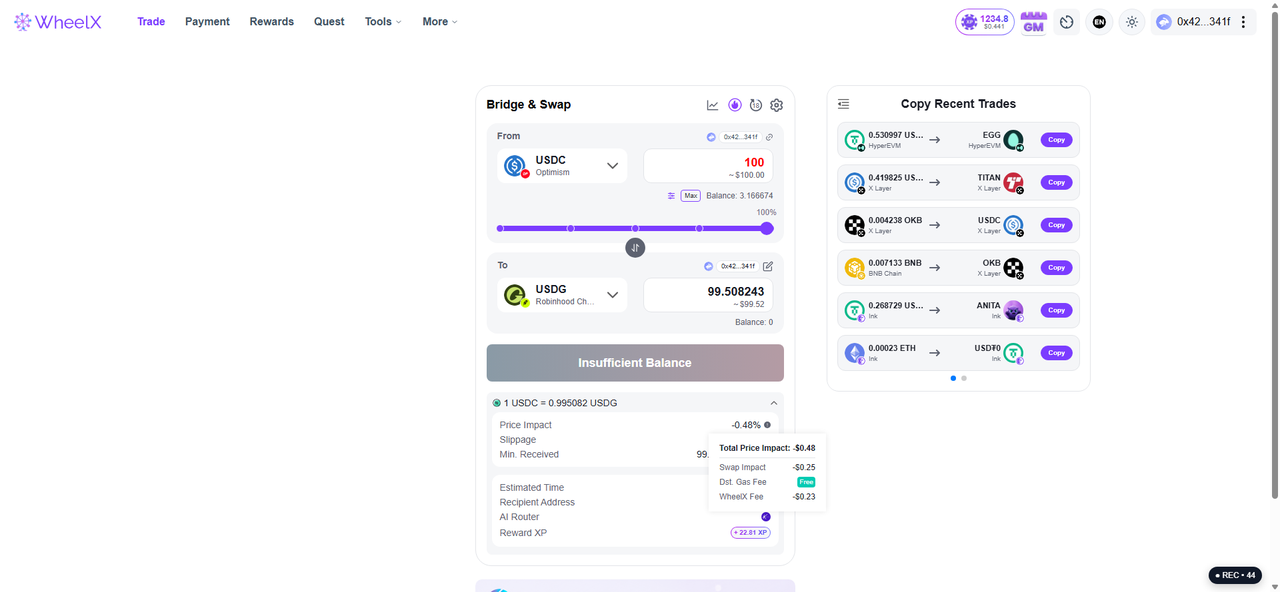
We recorded fresh WheelX quotes on 3 September 2026 using the same source chain, destination chain and token pair, then changed only the input size. The $10 and $100 quotes are included as controls; the article is aimed at larger trade sizes. The quotes were inspected, not executed, because the connected wallet did not hold the test amounts. This makes the table a routing snapshot rather than a claim about guaranteed future execution.
- Source: USDC on Optimism
- Destination: USDG on Robinhood Chain
- Trade sizes: $10, $100, $1,000, $10,000 and $100,000
- Recorded quote route: Relay across all five stablecoin sizes
- Recorded estimated time: about 1 second across all five stablecoin sizes
| Input | Quoted output | Price impact | Minimum received | Est. time |
| $10 | 9.687251 USDG | -3.10% | 9.638814 USDG | ~1s |
| $100 | 99.508243 USDG | -0.48% | 99.010701 USDG | ~1s |
| $1,000 | 997.697467 USDG | -0.22% | 992.708979 USDG | ~1s |
| $10,000 | 9,979.580760 USDG | -0.19% | 9,929.682856 USDG | ~1s |
| $100,000 | 99,796.432120 USDG | -0.19% | 99,297.449959 USDG | ~1s |
What the numbers tell us
- Small trades can be disproportionately expensive. At $10, the quote showed -3.10% price impact. At $100, it had already fallen to -0.48%. Fixed and semi-fixed routing costs matter much more when the trade itself is small.
- The route became much more efficient as size increased. The $1,000 quote showed -0.22%, while both $10,000 and $100,000 were around -0.19%. In this snapshot, scaling the trade by 10,000x did not make the relative impact 10,000x worse.
- Large trades still need live quote checks. The same result should not be assumed for every token, chain or market condition. Liquidity, bridge capacity, gas, destination costs and price movement can all change the best route. The useful behavior is that WheelX exposes the quote before the user signs.
$10 vs $100K: Same Pair, Very Different Relative Impact
A Second Test: The Selected Router Can Change With Size
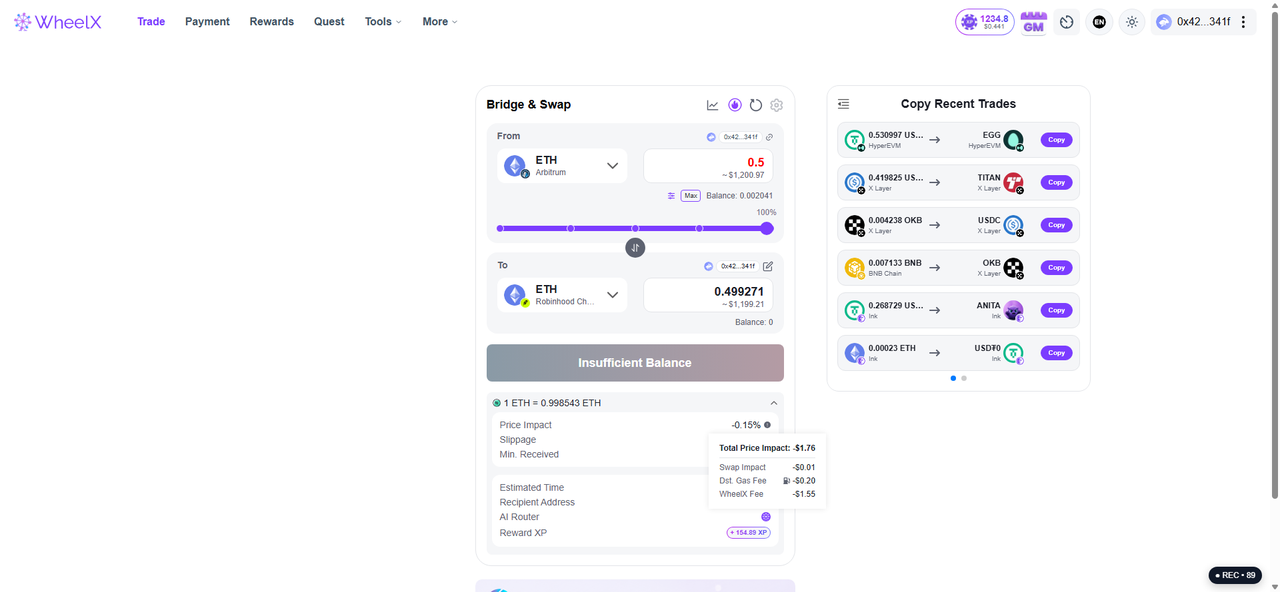
Stablecoin efficiency is only one part of the story. We also recorded ETH from Arbitrum to ETH on Robinhood Chain. In this second test, the visible price impact stayed at about -0.15%, but the quote logs selected different routers at different sizes.
| Input | Quoted output | Price impact | Est. time | Recorded router |
| 0.5 ETH | 0.4992716 ETH | -0.15% | ~10s | WheelX |
| 1 ETH | 0.9985353 ETH | -0.15% | ~1s | Relay |
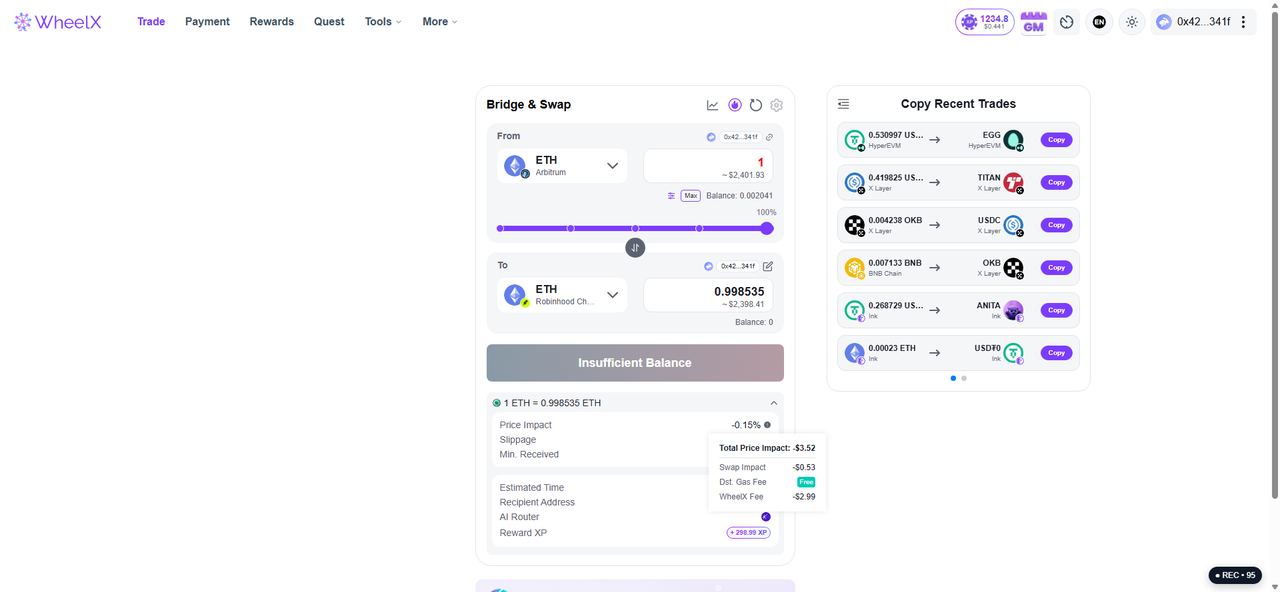
Why this matters for high-value traders For a five- or six-figure transfer, the right question is not simply “Which bridge do I normally use?” It is “Which route is best for this exact size, pair and moment?” Aggregation matters because the optimal path can depend on the trade itself. |
Why Compare Routes Instead of Committing to One Bridge?
Robinhood Chain already has meaningful volume across several bridge rails. The L2BEAT interop view we checked showed Across at about $33.08M, LayerZero at about $27.26M, and Robinhood Chain Canonical at about $20.26M in displayed bridge volume. This is not evidence that one bridge is always cheaper than another. It shows that liquidity and user flow are spread across multiple execution paths.
A single-bridge workflow forces the trader to choose the venue first and evaluate the quote second. An aggregator reverses that process: start with the trade, compare available paths, then execute the route that fits the current quote.
- For smaller trades, fixed costs can dominate economics.
- For larger trades, liquidity depth, price impact and route capacity become more important.
- For every size, quotes can change between inspection and signing.
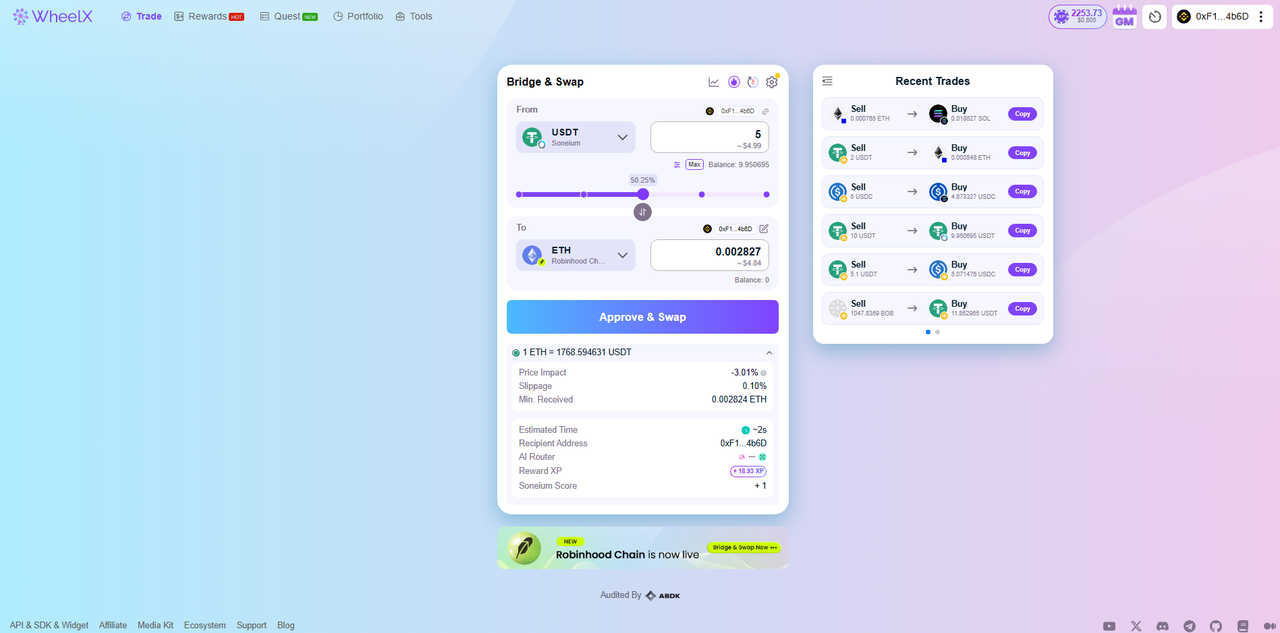
How to Check a Large Robinhood Chain Trade on WheelX
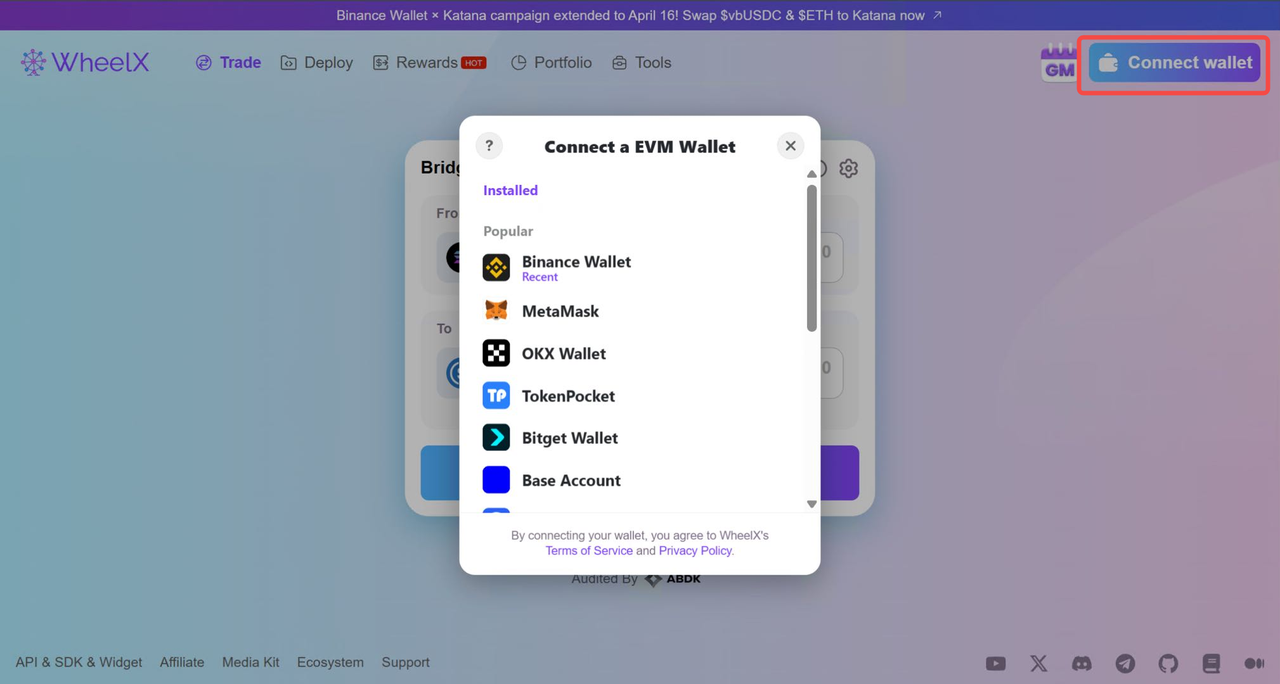
- Open WheelX Trade Go to https://wheelx.fi/swap/ and connect to an EVM-compatible wallet.
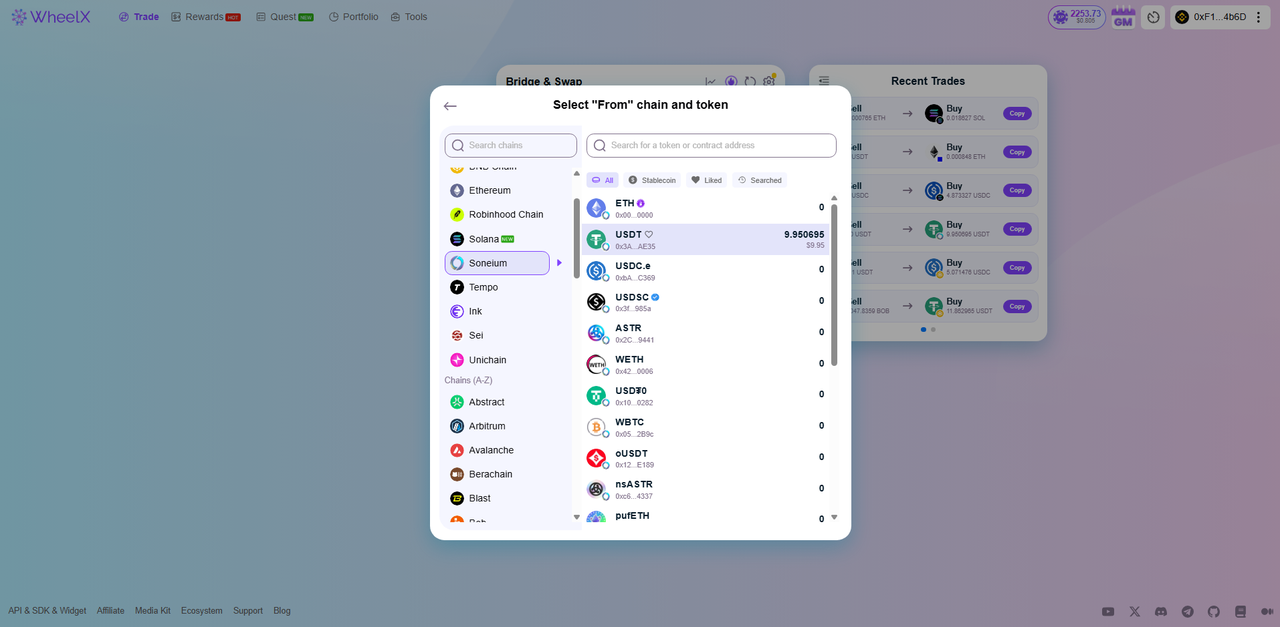
- Choose the source asset Select the chain and token where your capital currently sits.
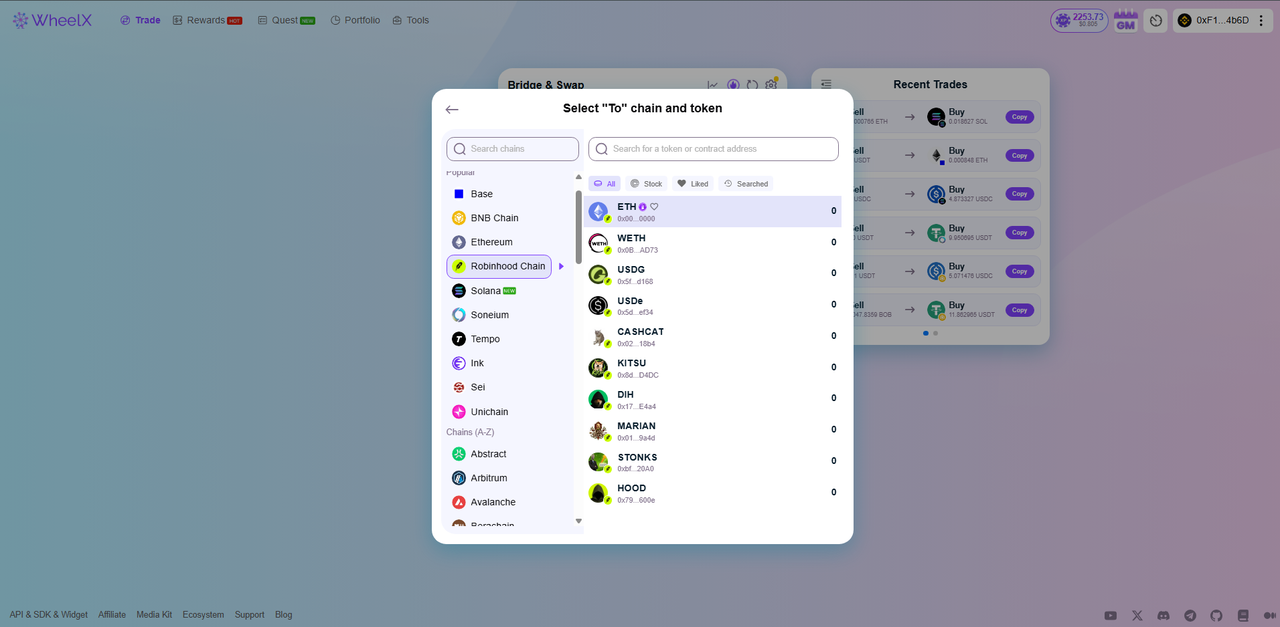
- Set Robinhood Chain as the destination Choose the destination asset you want to receive, then enter the amount you actually plan to move.
- Read the quote before signing Check expected output, price impact, slippage, minimum received, estimated time and the route. For a large trade, refresh the quote immediately before execution rather than relying on a screenshot or an earlier estimate.
- Robinhood also Supports the US Stock
The Bigger the Trade, the More the Route Deserves Attention
Robinhood Chain is already processing meaningful cross-chain capital, and the route landscape is not one-dimensional. Our recorded WheelX test showed two useful patterns: relative cost behavior can change substantially as trade size increases, and the selected router itself can change across quote sizes.
That is the core case for using WheelX when moving size into Robinhood Chain. Instead of assuming that a familiar bridge or a small-trade quote will scale cleanly, traders can check the live route for the exact amount they intend to move.
About WheelX
WheelX is a cross-chain infrastructure platform designed to simplify on-chain interactions across multiple networks. From bridging and swapping to smart contract deployment and real-world asset access, WheelX empowers users to explore global financial opportunities in a seamless and efficient way.
🌐 Dapp: https://wheelx.fi/
🐦 X: https://x.com/WheelX_fi
💬 Discord: https://discord.gg/GaqW8QEVTF
📱 Telegram : https://t.me/WheelX_official
▶️ Youtube : https://www.youtube.com/@wheelxfi
📘 Docs: https://docs.wheelx.fi/
✅ Audit Report: http://bit.ly/3K5xwEA